The Challenge
Two storms, lasting lessons
For Brighton Pride, weather has long influenced far more than event schedules. Sudden changes in conditions can affect crowd movement, temporary structures, transportation, and the ability of staff to respond safely.
In 2003, a heavy downpour swept through Preston Park while the event was underway. Large numbers of attendees sought shelter simultaneously, overwhelming the capacity of covered areas. At a large dance tent, the pressure caused a barrier line to buckle, resulting in minor injuries to staff and members of the public.
The incident exposed a critical crowd-management risk: areas intended to provide shelter could become dangerous gathering points during adverse weather.
Following a multi-agency review, organizers changed how access to tented and sheltered areas was managed. Appropriate barrier systems, security, and covered-area capacity became integral parts of the event's crowd-management planning. Four years later, another weather event revealed a different vulnerability.
In 2007, wet, windy, and cold conditions prompted large numbers of attendees to leave earlier than anticipated. Many headed toward Brighton Station before the planned queueing infrastructure was ready, creating the potential for dangerous crowd congestion.
The experience permanently changed the event's approach to departures. Station queueing arrangements are now established earlier, with deteriorating weather treated as a potential trigger for accelerating exit plans.
Brighton's coastal location adds another layer of complexity.
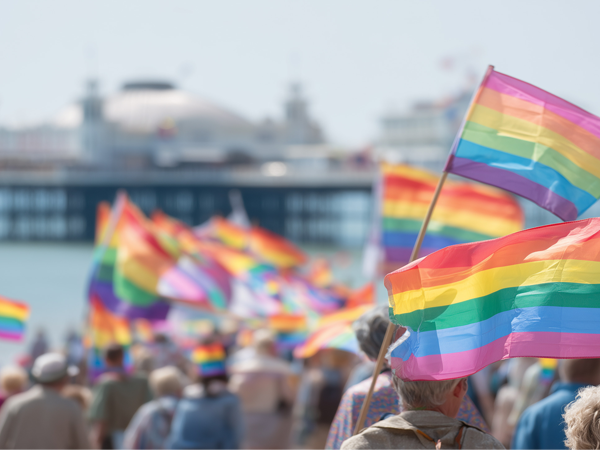
The parade assembles along an exposed seafront promenade, where wind and rain can affect participants and temporary infrastructure. The city's valley geography can amplify wind along the parade route, potentially affecting signage, temporary structures, and float stability.
Across the city, each event site presents different vulnerabilities. The parade, park, street party, campsite, and station operations have distinct layouts, surfaces, and shelter options. Coastal conditions can also change rapidly, making localized, short-range forecasts particularly important.
Historically, weather information came from multiple forecasting apps, agencies, and other sources. Without a shared view, operational teams could be interpreting different forecasts while making decisions affecting the same citywide event.
“An event like Pride runs on strategic, tactical, and operational decisions being taken at the same time across sites that each have their own pressures,” said Anne Marie Chebib, Managing Director of Select and Chair of the UK Crowd Management Association (UKCMA). “Having one weather picture that every lead could see meant no one was reconciling different forecasts before a call could be made.”
The Solution
One weather picture across the operation
For Brighton Pride 2026, Select worked with DTN and UKCMA to establish a more coordinated approach to weather monitoring.
DTN Weather Hub provided a centralized dashboard for forecasts, alerts, and weather tracking, with configurable monitoring radii and alert thresholds aligned to the event footprint. Rather than relying on separate weather sources, operational and safety leads could access the same information throughout the event.
DTN also provided Weather Room consultations with professional meteorologists, including pre-event reporting and live weather briefings into the control room. DTN Remote Watch services monitored conditions against the event's locations and operating schedule.
“Having all alerts, weather tracking, and other elements on one dashboard was extremely useful,” according to a member of Select's operational team. “Also being able to set the radius and alerts was super useful.”
Heat takes center stage in 2026
Unlike previous years when wind and rain had prompted major contingency decisions, heat became the primary weather concern in 2026. The open-air street party exposed the biggest risks: hot road surfaces, limited shade, and a seafront location.
In the final week before the August event, forecasts indicated increasingly hot conditions. Organizers monitored developments daily, evaluating whether additional drinking water, shade, and other measures would be needed.
On Saturday, temperatures reached 24.5°C. Sunday climbed to 26.4°C and peak on Monday at 29.7°C when an amber heat-health alert took effect after the event had concluded.
Using the developing weather picture, organizers incorporated heat considerations into staff briefings and public messaging. Additional drinking water was arranged for the parade and park, while proposed misting measures were ruled out because of legionella risk.
The Results
Coordinated decisions from the control room to the parade route
Across the 2026 Pride weekend, DTN Weather Hub gave operational leads a common source of weather information, helping align decisions across the event's dispersed locations.
Weather briefings were shared with Parade Local Control at Hove Town Hall and citywide multi-agency coordination teams, supporting discussions involving police, fire, ambulance, and council partners.
“The ability to have a centralised dashboard with all key information was invaluable,” a Select team member said.
Weather did not cause the recorded parade delays, and hospital demand across the weekend was reported at the multi-agency debrief as better than in the previous four years.
The team also identified opportunities for further improvement. Because access to Weather Hub began partway through the planning cycle, its contribution to longer-range preparation could not be fully evaluated. Conditions during the event also remained within operational tolerances, as such the platform was not tested against a major weather emergency.
Nevertheless, Select concluded that Weather Hub had earned its place in the control room.
Looking Ahead
Bringing weather intelligence into planning earlier
From the downpour of 2003 to the rising temperatures of 2026, Brighton Pride's experience demonstrates how weather can influence crowd behavior, staffing, infrastructure, and event operations.
As the Select team observed: “Weather is not a standalone workstream. It sits underneath crowd behaviour, staffing, infrastructure, and the public's relationship with the event.”
For future events, Select identified two priorities: introducing Weather Hub at the beginning of the planning cycle and aligning alert thresholds with existing adverse-weather procedures.
Those steps would extend the shared weather picture beyond event-day operations, helping teams incorporate weather intelligence earlier in their preparations.